-
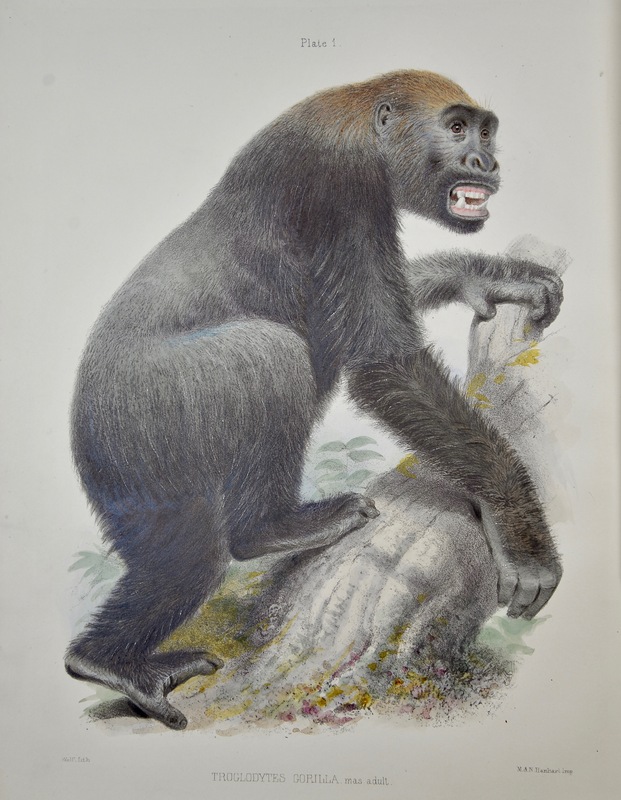
English taxonomist and paleontologist Richard Owen (1804-1892) published Memoir on the Gorilla only nine years after Paul Belloni Du Chaillu became the first European to confirm the existence of gorillas in the wild during his expedition to Gabon in 1856. Owens – famous for having taught natural history to Queen Victoria’s children, his quarrels with famed naturalist Charles Darwin, and for naming a new taxon of large extinct reptiles – Dinosauria – in 1842 – wrote the first complete anatomical description of gorillas using several preserved specimens collected by Du Chaillu. Despite his anatomical accuracy, Owen’s anti-Darwinian views led him to erroneously state that gorillas lack certain parts of the brain that humans have, specifically a structure called the hippocampus minor, citing this as evidence that humans could not possibly be related to apes. Owens also erred in his account of the gorilla’s behaviors, reflecting the fear and misunderstanding of great apes that later led to their frequently being killed by thrill-seeking hunters and poachers in the late 19th and early 20th centuries. On page 35, Owens writes “Lacerations of the abdomen and laying bare of the intestines of a hunter are described as the effects of a blow of… the Gorilla… Mr. Du Chaillu also adduces the testimony of the natives, that, when stealing through the gloomy shades of the tropical forest, they become sometimes aware of the proximity of one of these frightfully formidable Apes by the sudden disappearance of one of their companions, who is hoisted up into the tree, uttering perhaps, a short choking cry. In a few minutes he falls to the ground a strangled corpse.” Even as primatologists later disproved these harmful perceptions of gorillas, gorilla numbers across Africa declined dramatically over the last century due to destruction of habitat from agricultural expansion and timber harvest, poaching, war and political unrest, and human disturbance. Today, all gorilla subspecies are classified as “Endangered” according to the International Union for Conservation of Nature’s (ICUN) criteria. However, dedicated conservation initiatives have ensured that gorilla numbers are now slowly increasing. Innovative new conservation ideas, including remotely monitoring gorilla movement and spreading awareness of the dangers of consuming bushmeat have shown some success in slowing gorilla population declines. In fact, the World Wildlife Fund recently announced that mountain gorilla numbers have increased to above 1,000 individuals for the first time in decades due to conservation efforts. Traditional protected areas are still one of the main conservation strategies to address threats such as hunting and habitat loss, however new tactics including working directly with logging companies and local communities to regulate the bush meat trade have also helped to reduce hunting pressure. If gorillas are to be conserved into the future, a combination of national parks, reducing human conflict, and working with local farmers and loggers will all be essential tools for maintaining viable populations.
-
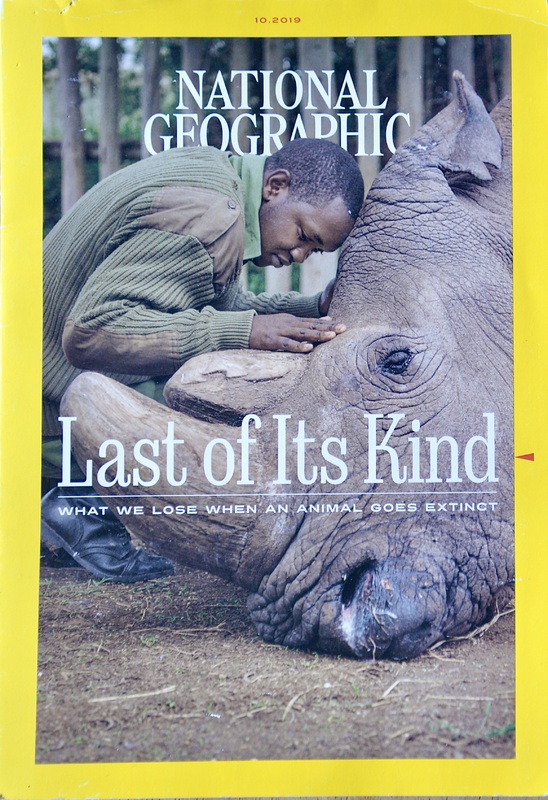
The October 2019 cover of National Geographic depicts Joseph Wachira, a keeper at the Ol Pejeta Conservancy in Kenya as he says goodbye to the last male northern white rhinoceros who died in 2018. This poignant image struck a chord with many readers, landing it a spot in the magazine’s “best photographs of the decade.” According to National Geographic photographer Joel Satore, photos like these are important to sensitizing viewers, “because extinction takes place so frequently now, it’s possible to become inured to it.” A recent UN report found that one million species “are now threatened with extinction, many within decades,” spurring National Geographic to dedicate their October edition to asking, “what do we lose when we lose a species?”
-
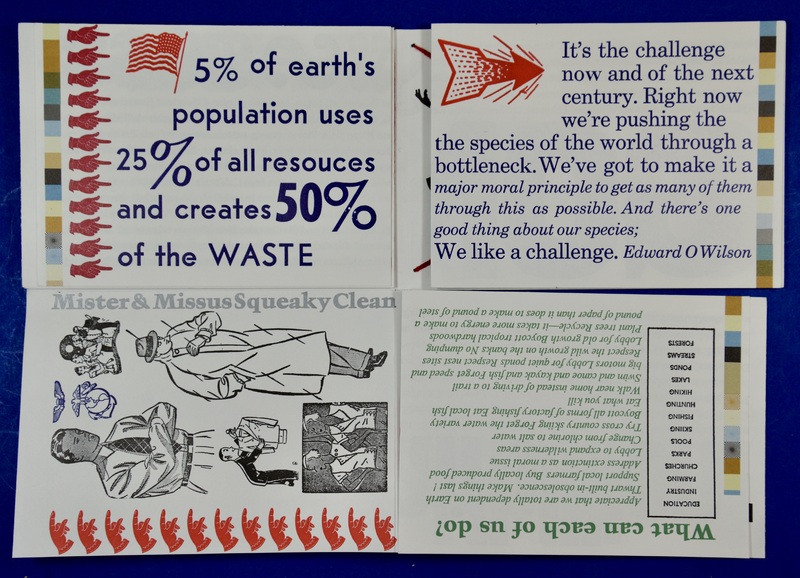
Volumes (of Vulnerability) highlights the contemporary causes of what the authors call “a sixth mass extinction driven by human expansion,” such as consumerism and global climate change. In so doing, it challenges viewers to consider what each of us can do to combat these man-made threats to plants and animals. While Johanknecht and Meynell note that slowing species loss will prove difficult, they evoke conservationist E. O. Wilson’s sentiment that “(humans) like a challenge.”
-
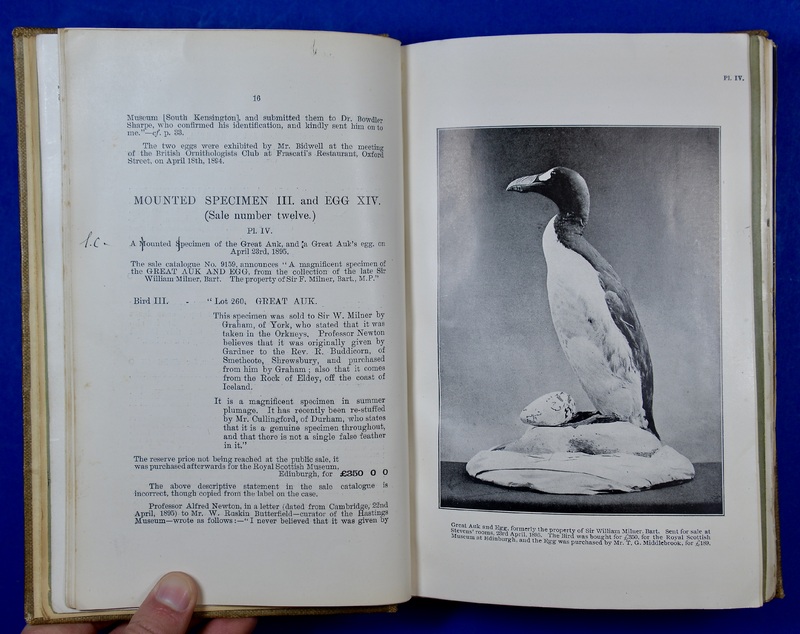
The Great Auk was once a seabird native to the North Atlantic. Hunted since prehistoric times, its numbers dwindled rapidly as sailors learned to hunt the birds along the sea cliffs of Iceland and Nova Scotia. To make matters worse, the last colony of Auks was nearly destroyed by a volcanic eruption off of Iceland in 1830, after which only 60 birds remained. Museums and collectors began to worry that they might disappear and paid to have 48 of the surviving birds killed for specimens, ironically dooming the species to extinction. The last two Auks in the world were killed to add to a businessman’s bird collection in 1844. The extinction of the Auk should be a sobering tale for us today. Will we wait until more species become specimens and collectables, or will we strive to protect species in their natural habitats before it’s too late?
-
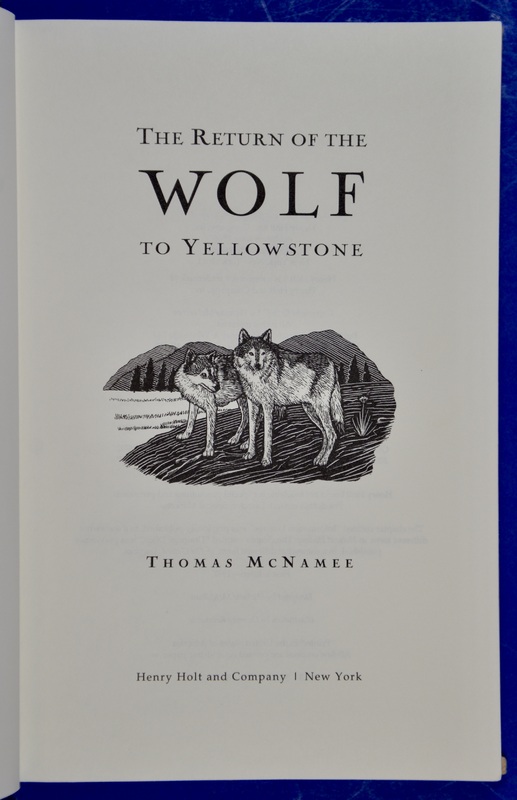
Wolf population recovery was made possible by the monumental declaration of protection for the gray wolf under the Endangered Species Act (ESA) in 1974. Reintroduction of wolves to Yellowstone National Park and Idaho in 1995 further enabled this recovery after years of political battles and grassroots efforts to win support from local ranchers. Since the wolf’s return, scientists have documented a myriad of environmental benefits, including increases in beaver, brook trout, aspen, and willow tree populations. Elk and deer populations overgraze low-lying shrub habitats, altering river flows and habitats crucial to other animals if not checked by wolves. Gray wolves now inhabit 13 states, but their status as an endangered species remains in limbo at both the federal and state levels, threatening the potential progress enabled by their protection.
-

"March 13, 1779 - Receiv'd of Nicholas Gilman Ten pounds, being the Sum allowed by an act of the General Court for killing a grown wolfe £10.00 and for Abner Ally…This may certify that on the 12 day of December 1778, Abner Ally of Chesterfield killed + brought in to me one grown Woolf which I have taken there + disfiggered it for me"
Wolf bounties paid to Gilman and Ally were worth a considerable sum; £10 in 1800 had the purchasing power of £816.00 in 2018. The hole punched in this document indicates the bounty was paid and cancelled to assure it was not cashed twice. Colonial and federal governments encouraged the extermination of wolves in the U.S. for over 300 years, as Europeans viewed them as bloodthirsty killers and threats to livestock.
-
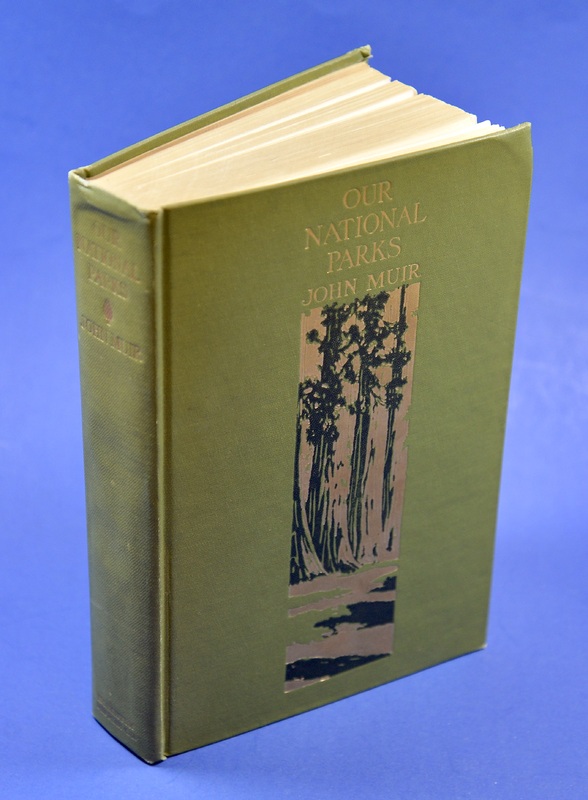
John Muir, the “Father of the National Parks,” was an influential Scottish-American naturalist, author, environmental philosopher, and early advocate for the preservation of wilderness. His letters, essays, and books have been read by millions interested in his experiences in nature. Thanks to Muir’s activism, Yosemite Valley, Sequoia National Park, and many other wilderness areas have been preserved. The Sierra Club, which he co-founded, remains a prominent American conservation organization. In Our National Parks, Muir extolled the beauty, grandeur, and importance of Yosemite, Sequoia, Yellowstone, and other National Parks to the American public and urged continued preservation of these natural areas as sanctuaries for both humans and wildlife.
-
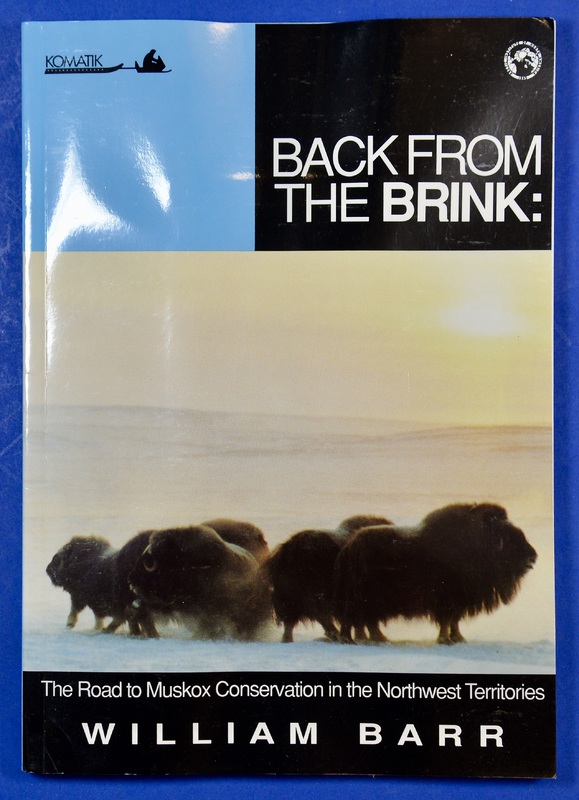
Muskoxen hides were primarily used for sleigh and carriage robes in Europe between 1860-1916, as substitutes for rapidly disappearing bison hides. According to Barr’s research, the Hudson Bay Company traded 17,485 muskoxen hides during the trade peak in the 1860s-1890s. After the number of muskoxen in the Northwest Territories reached a critically low level around 1915, legislation was passed in 1917 banning commercial hide sales. Thanks to these legal protections and subsequent management by local Inupiaq communities, muskoxen numbers have risen dramatically. Today the animals have recolonized practically their entire historic range.
-
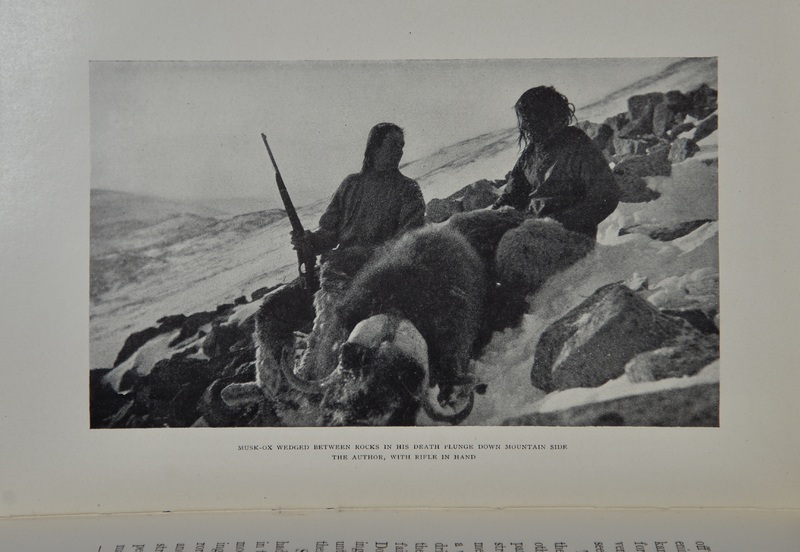
Harry Whitney (1873-1936; pictured above) was an American sportsman, adventurer, and author. He traveled to northern Greenland in 1908, staying the winter with the indigenous Inughuit to hunt polar bears, arctic hare, walrus, whales, and the prized muskox. A year after his second hunting trip to Greenland, he published this book about his experiences. Big-game hunting—the hunting of large animals for trophy, sport, or raw materials (such as meat, horn, bone, or oil)—became tremendously popular in the late 19th and early 20th centuries as wealthy, urban elites grew accustomed to increased amounts of free-time and disposable income. Unfortunately, unsustainable big-game hunting practices eventually led to considerable reductions in wildlife populations from the Arctic to Africa.
-
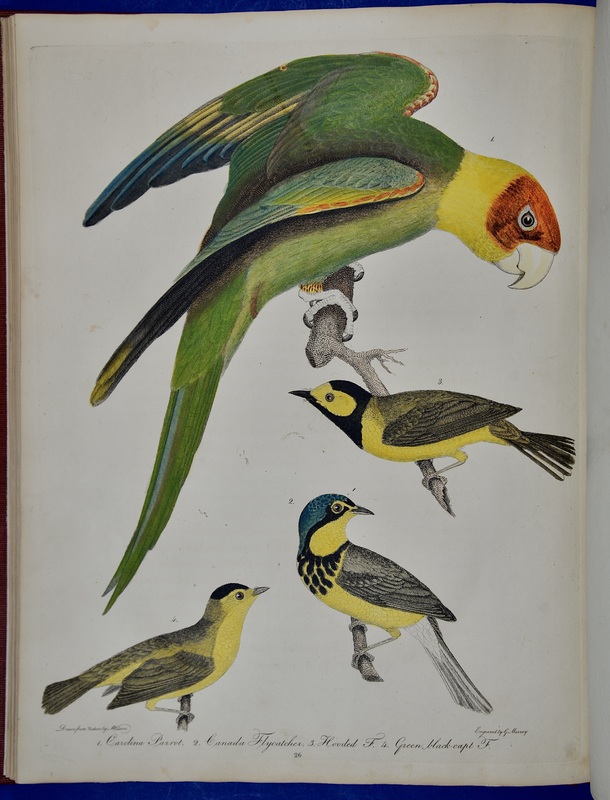
Alexander Wilson writes fondly of the Carolina Parakeet, America’s only parrot species, but he also discusses how they were a considerable nuisance to farmers. Their appetites lent them to being “destroyed in great numbers, for whilst busily engaged in plucking off the fruits or tearing the grain from the stacks, the husbandman approaches them with perfect ease, and commits great slaughter among them.” To make matters worse, the forests in which these birds lived were cleared in large swaths and their colorful feathers became popular decorations for women’s hats. The last Carolina Parakeet died in captivity at the Cincinnati Zoo in 1918. Aside from their bygone charms, Carolina Parakeets were important seed dispersers, meaning their disappearance negatively affected various seed-bearing plants.
-
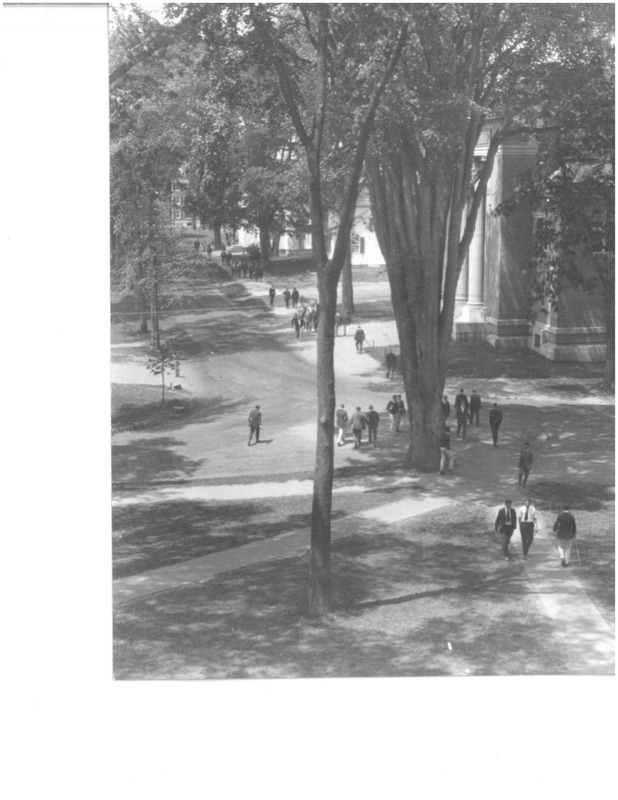
These photographs depict the large stands of American Elm trees that once towered above Dartmouth’s campus as well as their removal in the 1950s and 1960s when the trees began dying following the accidental introduction of Dutch Elm Disease (DED). Prior to the introduction of DED, American Elm trees were so plentiful around Hanover that Dartmouth was known as the “campus of a thousand elms.” As shown in these photographs, massive American elm trees once encircled the College Green, providing shade to students as they passed in front of Webster Hall (now home to Rauner Library). Until Dutch elm disease made its appearance, the life expectancy of an American elm was approximately 400 years (to see a photograph of a famous "old elm" which stood in front of famous Dartmouth alumni Daniel Webster's home in the late 1800s, see the fifth image in the attached PDF file). Today, American elms rarely live to reach 100 years old. Originally native to Asia, DED came to America in the 1920s when shipments of logs cut in the Netherlands brought with them fungus-carrying bark beetles. Since the arrival of these beetles, DED has devastated native elms without resistance to the disease. Of the estimated 77 million elm trees in North America in 1930, over 75% had been lost by 1989. While there may not be a thousand, Dartmouth's campus is still home to a few surviving elm trees, thanks to the help of periodic anti-fungal treatments and their isolation from one another; they stand as solemn testaments to the forests of years past. Today, the World Conservation Union estimates that globally, introduced invasive species like Dutch elm fungus may be as damaging on a global scale as habitat loss.
-

Not just animals face extinction. Humans have driven an estimated 600 plant species to extinction since the 1750s, along with thousands of locally cultivated varieties of staple food crops, from potatoes to apples. Once-popular New England apple varieties like the Pickman Pippen (see above) have since disappeared as higher-yielding and aesthetically uniform apple varieties used in industrial agriculture have come into favor. Scientists now express concern about our reliance on an ever-smaller number of plant varieties cultivated for human consumption, as this leaves large portions of our food supply vulnerable to be wiped out by a singular disease or pest, like during the Irish Potato Famine in the 1840s.
-

Leander Owen (1833-1911) was a ship captain and whaling master who travelled extensively through the Arctic during the peak of the Atlantic whaling fishery. Owen’s personal journal documents the first whaling trip ever made into the Arctic by a steam-powered vessel. The journal recounts the astonishing speed and efficiency with which sailors were killing Bowhead and North Atlantic right whales—both species that are endangered in their native habitats today. Each drawing of a whale’s tail in Owen’s journal denotes one animal successfully killed and “cut” (stripped of its blubber) within a given day.
-

In hopes of encouraging more whaling expeditions around Greenland, British Parliament and King George II passed this Act. It provides for tax breaks and reduced costs for sailing supplies "on the condition that their firm purpose, and determined resolution... is to use the utmost endeavors of themselves and their ship's company to take whales, or other creatures living in the sea... and to import whales fins, oil, and blubber thereof into the Kingdom of Great Britain.” The Act was instituted out of fears that Great Britain was falling behind other European nations in its production of whale oil. In the race for economic dominance by imperialist powers such as Great Britain, such acts led to increased hunting pressure even as whale stocks began to decline.
-

After the publication of Rachel Carson’s Silent Spring in 1962, the American public began to question their use of modern synthetic pesticides, such as dichloro-diphenyl-trichloroethane, or DDT. In the 30 years prior to being banned in 1972, a total of 1,350,000,000 pounds of DDT was sprayed across the United States. Carson reported that birds ingesting DDT tended to lay thin-shelled eggs that would break prematurely, resulting in population declines of more than 80 percent. Despite fierce opposition from chemical companies, Silent Spring ushered along numerous changes, including a reversal in United States pesticide policy, a nationwide ban on DDT in agriculture, and the eventual establishment of the Environmental Protection Agency by those inspired by the text. The book condoned short-sighted tampering with the environment that was pervasive during the Cold War, challenging farmers, companies, and the U.S. government to consider the long-term side effects of their actions. Without Silent Spring, the ban on DDT and ensuing protections, the bald eagle and dozens of other bird species would have likely disappeared from the continental U.S.
-
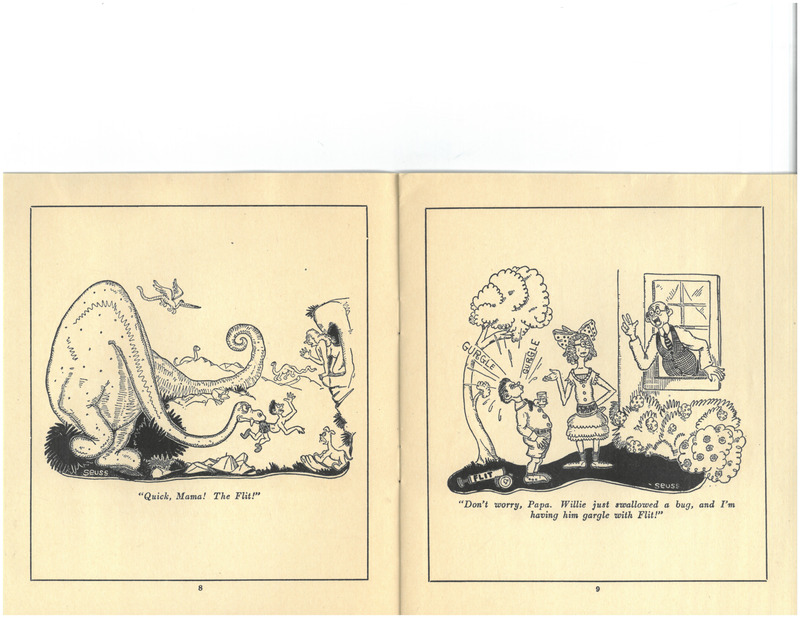
Long before his success as Dr. Seuss, Theodore Geisel (Dartmouth Class of 1925), designed advertisements for Flit, Standard Oil Company’s wildly popular spray-pump insecticide which later contained DDT. Over the course of 17 years, Geisel’s humorous advertisements helped make Flit a household name throughout the 1930s and 1940s. At the time, liberal spraying of pesticides around people, animals, and crops was highly encouraged with little regard to potential environmental impacts.
-
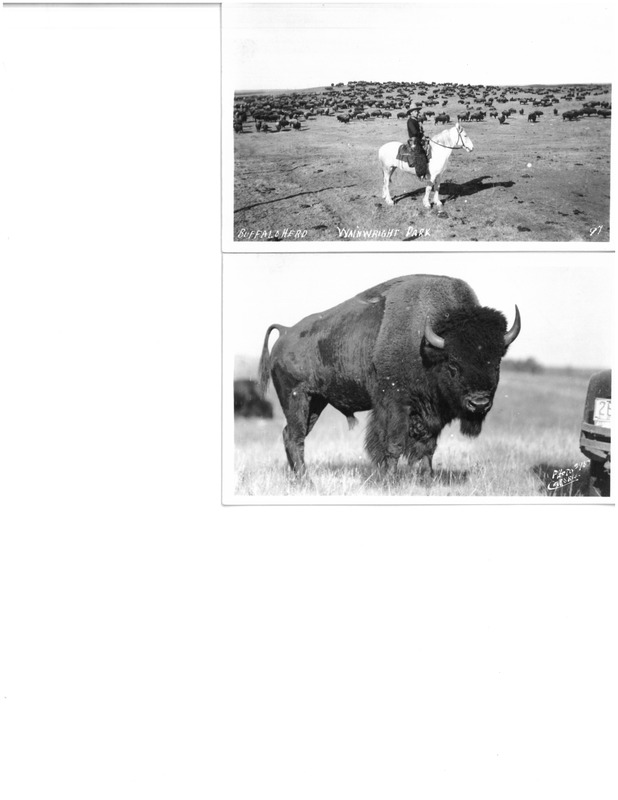
Herds of bison roamed what is now Banff National Park in Alberta, Canada for 10,000 years until nearly driven to extinction by human activity prior to the park's creation in 1885. These photographs depict herds of plains bison in Wainwright Buffalo Park, Canada, established in 1909 to regenerate dangerously low populations of bison (and to produce beef as the photo captions indicate). In December of 2019, Parks Canada announced the release of a small herd of plains bison in Banff, over 140 years after local populations were hunted to extinction.
-
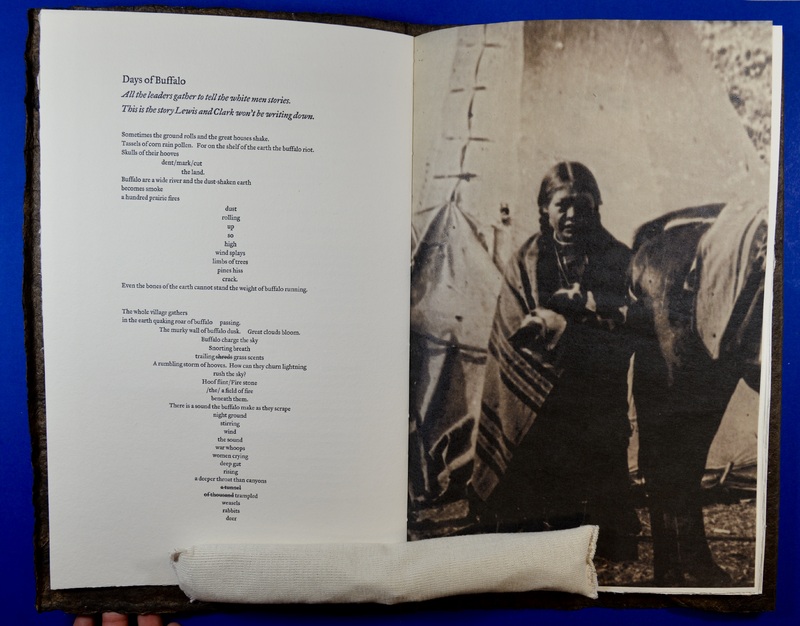
Debra Magpie Earling, a member of the Confederated Shalish and Kootenai Tribes of the Flathead Reservation, created this artist book during the bicentennial of the Lewis and Clark expedition to represent the hardships brought upon Native American cultures by colonialism. The cultural importance of the plains bison and the effects of its near extermination from the American West is reflected in both Earling’s poetry and the materials used to construct the book—it’s printed on smoked buffalo rawhide cover paper with trade beads and rifle shell cartridges adorning the spine. Earling writes, “Only a few photographs document the extermination of the bison and the hunter’s struggles against starvation. Instead, as if to marginalize the dying cultures, countless images survive that depict the arrival of the mining spectator, soldier, cowboy… all that followed to give us a thorough and close-up look at the noble savage-free territory of post-bison civilization.”
-
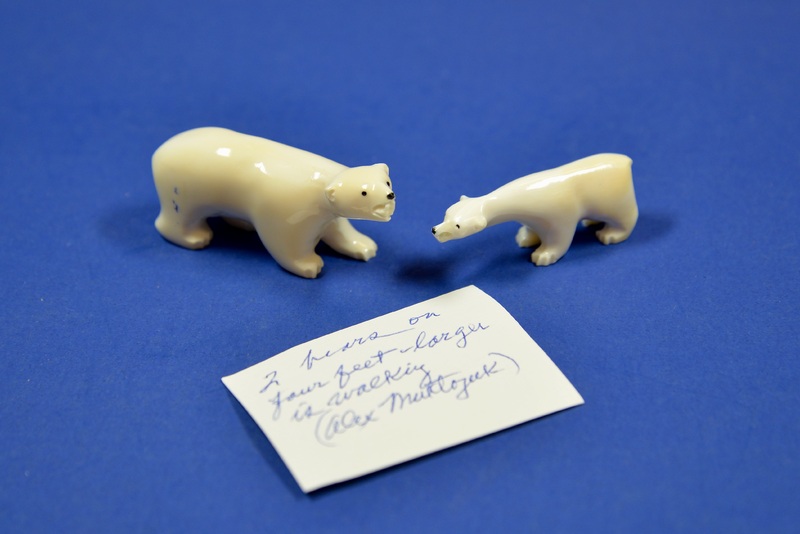
These walrus ivory carvings owned by Alex Magtoya were produced by native Inupiat people of the Arctic Ocean and Bering Sea regions. Indigenous communities of the Arctic have hunted walrus (among other sea mammals including seals and whales) as sources of food for hundreds of years, utilizing their skins, bones, and tusks for clothing, tools, and crafts. Walrus populations plummeted around the Arctic by the early 20th-century following the arrival of Europeans, only to rebound when limits were placed on commercial hunts. Today, walruses, polar bears, and many other Arctic animals face an even-deadlier threat - global climate change.
-
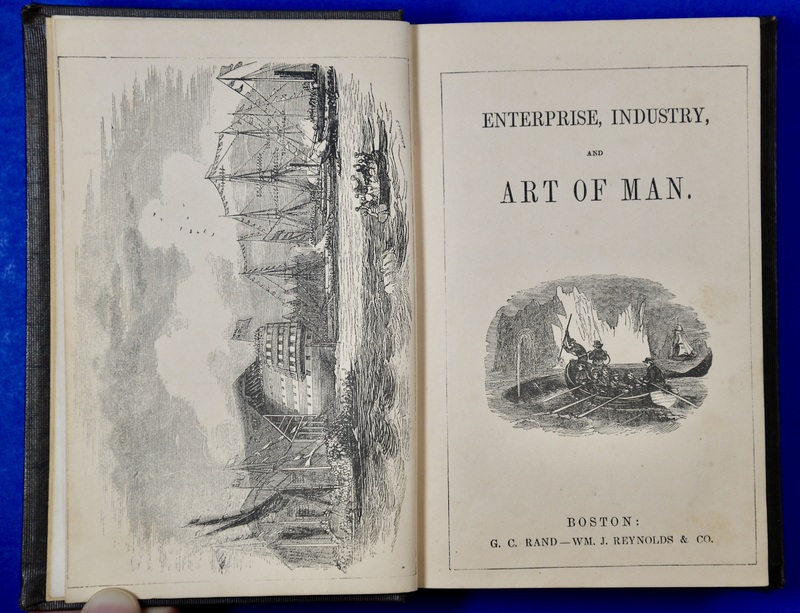
Written as an ode to the power of global trade, Enterprise, Industry and Art of Man is representative of the sense of awe Europeans felt about their ability to “tame” wilderness and harness it to better society during the Industrial Revolution. In the volume’s preface, Goodrich marvels at the origins of the material comforts in his personal study, including a piano whose materials hailed from forests of Brazil, Maine, and elephants in Africa. Meditations on his Argand lamp are of particular interest for “its oil [that] once dwelt in the head of a whale seventy feet in length, and which sloughed the Pacific for half a century.” As this quote (and illustration above suggest), the efficiency and global reach of extractive enterprises such as whaling were examples of progress and sources of pride in the minds of Western cultures.
-
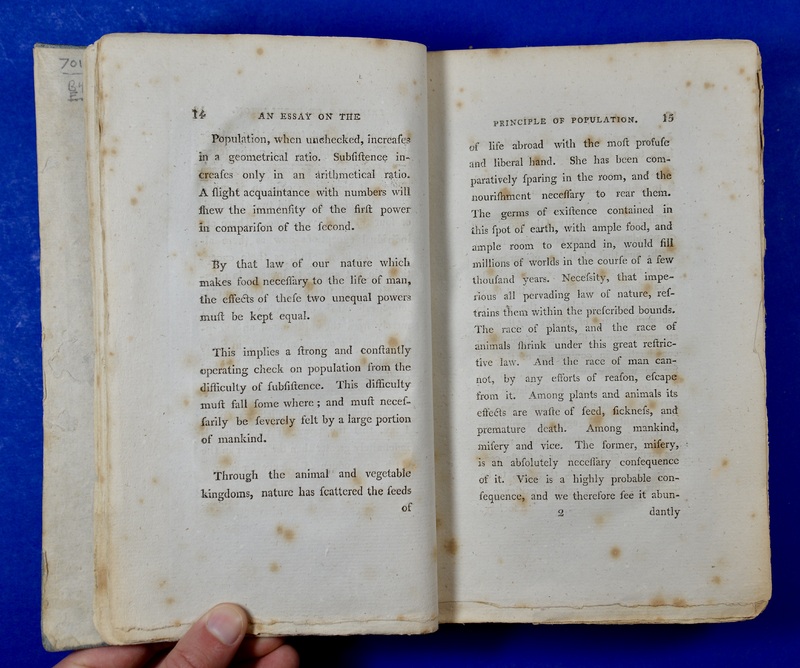
Our first edition of this famous work by Thomas Malthus (1766-1834) was published anonymously so as to avoid backlash. Malthus’ book contrasted with the optimistic views of Enlightenment thinkers such as Jean Jacques Rousseau by warning of future difficulties that would arise as human population growth outpaced food production. This essay sparked discussions about the environmental impacts of exponential human population growth, along with highlighting problems like poverty and famine.
-

George P. Marsh (1801-1882), Dartmouth Class of 1820, is considered America’s first environmentalist and among the first American natural historians to comment on species extinction. Man and Nature raised concerns about the destructive global impacts of human activities on the environment, including plants and animals. For instance, Marsh describes how European demand for beaver fur nearly doomed the industrious mammal to extinction in the Americas: “Parisian fashion has unconsciously exercised an influence which may sensibly affect the physical geography of a distant continent.” Man and Nature was received favorably and helped sparked the Arbor Day movement, the establishment of forest reserves and the national forest service.
-
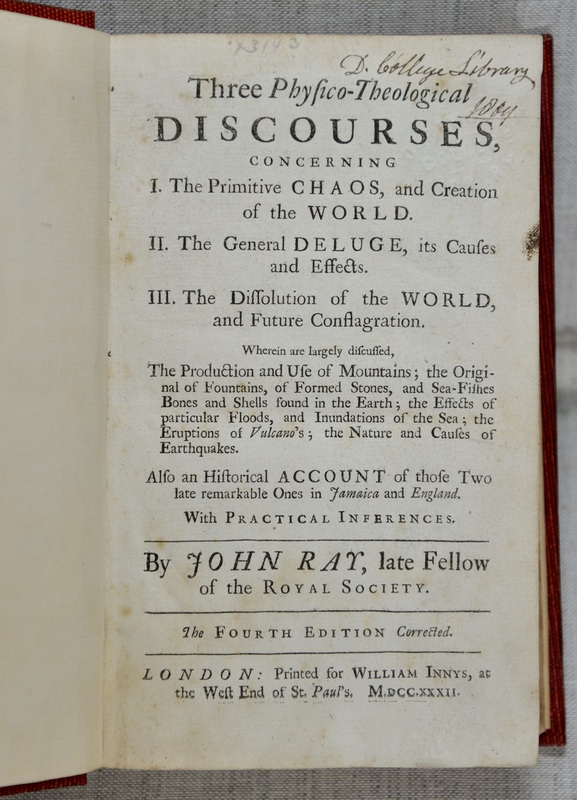
In this book, English naturalist John Ray elaborates on beliefs about the Great Flood from the Bible's Book of Genesis, during which God decides to reverse and redo creation by returning Earth to a state of watery chaos. While many 18th century natural historians and theologians used discovery of fossils (such as seashells in the Alps) as evidence of a global-scale flood, they did not see them as evidence of extinction. For many people during this time period, the idea of extinction was religiously troubling; it would suggest some flaw with God's divine plan at the beginning of the world. Additionally, belief that all life on Earth forms a Great Chain of Being—from ocean slime to angels—would make extinctions problematic breaks in its links.
-
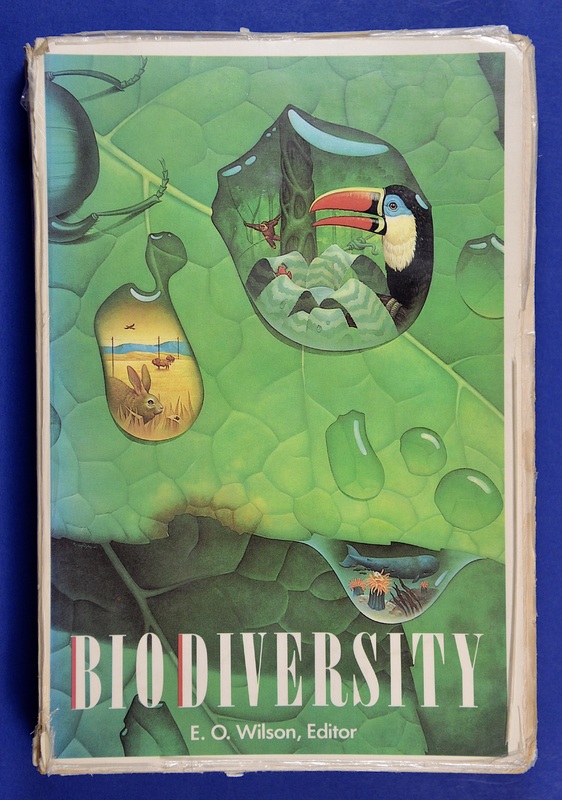
The 1980s witnessed a rise in concerns related to species conservation, due to growing awareness of the close link between economic development, deforestation, and extinction. This shift is evidenced by this publication by famed biologist, naturalist, and writer Edward O. Wilson which features the first appearance of the word “biodiversity” (defined as the variety of life in the world). Wilson writes, “The diversity of life forms, so numerous that we have yet to identify most of them, is the greatest wonder of this planet... The book before you offers an overall view of this biological diversity and carries the urgent warning that we are rapidly altering and destroying the environments that have fostered the diversity of life forms for more than a billion years.”
-
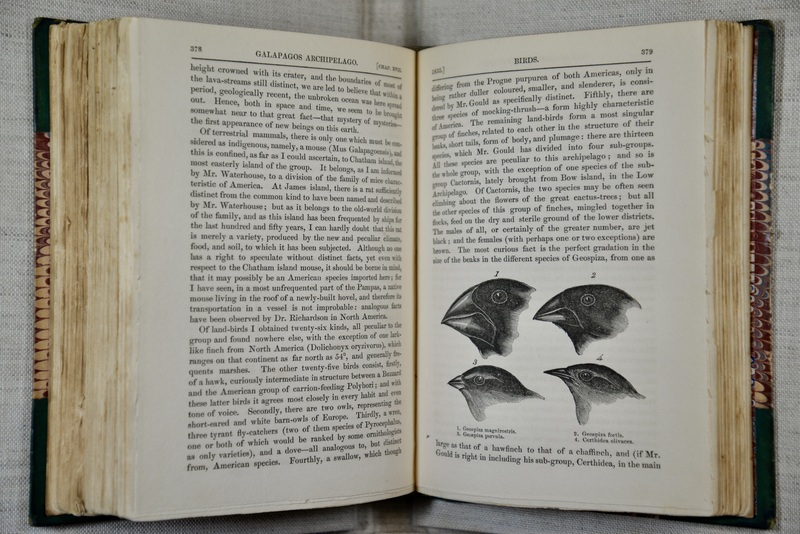
Charles Darwin’s (1809-1882) narrative of his voyage around the globe features the famous Galapagos finches whose beaks helped him develop his theory of evolution by natural selection. By observing the incredible variety of beak shapes among finch species, he postulated that the beak of an ancestral finch who had arrived at the remote island chain had adapted over time to equip the finches to acquire different food sources. Drawing on the diversity of Galapagos finches and other animals he encountered as examples of evolution by natural selection, Darwin’s theory fundamentally changed human understanding of species and how ecosystems change over time. Darwin posited that many species have died out as a result of competition between animals, and that this process had occurred gradually and continuously throughout the history of life. However, he neglected to clarify the role humans can play in driving species extinction, and believed that sudden disappearances of many species, or mass extinctions, did not actually occur.
