-
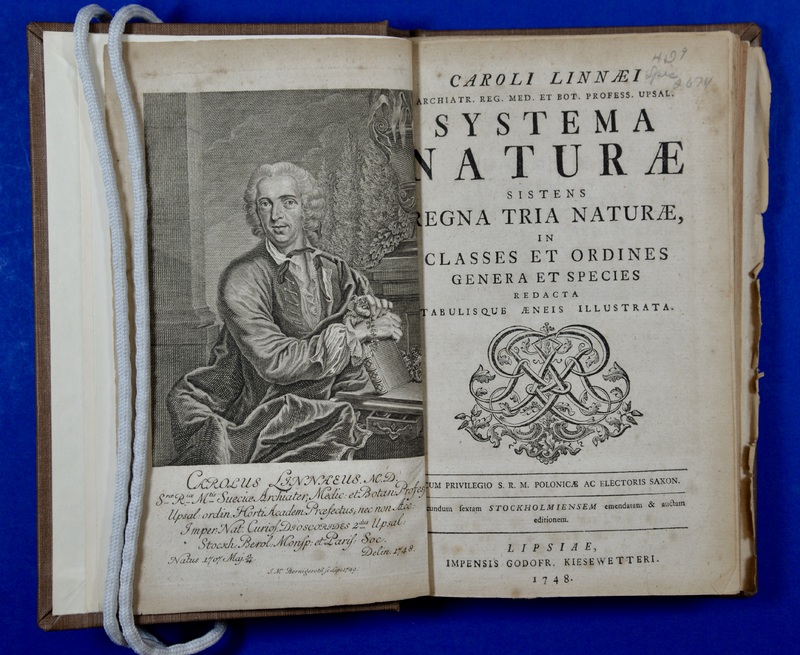
Systema naturæ
Swedish naturalist and explorer Carl Linnaeus (1707-1778) revolutionized scientific understanding of the diversity of the natural world with the publication of Systema naturæ in 1735. Linneaus established binomial nomenclature, the system of formally classifying and naming organisms according to their genus and species. In contrast to earlier naming conventions that used long descriptive phrases, binomial names do not judge different species on their perceived quality or desirability. Serving as a means by which species could be universally addressed, this new hierarchical system allowed scientists to better conceptualize relationships between organisms. -
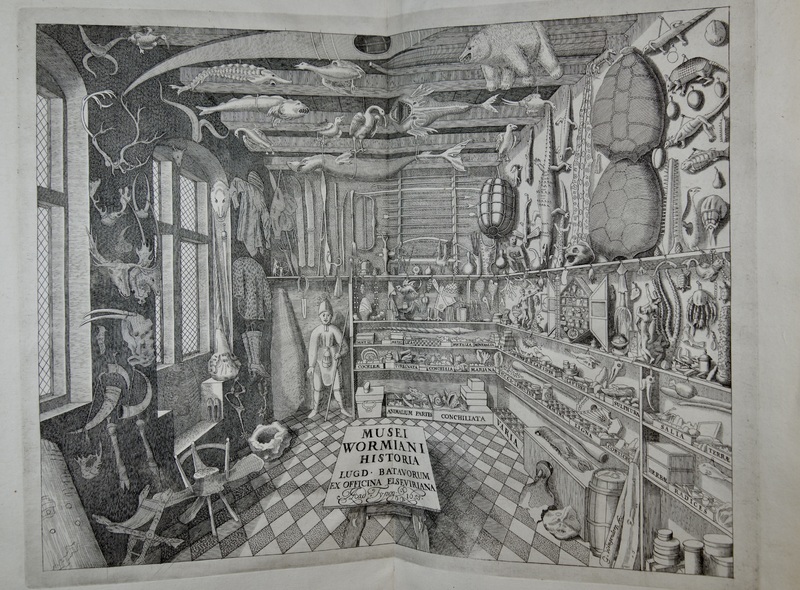
Museum Wormianum
Natural historians like Ole Worm (1588 – 1654) sought to classify and understand the diversity of living organisms according to differences in their appearance in order to better understand God’s design in nature. This frontispiece depicts Worm's famous cabinet of curiosities, a massive collection of artifacts from across the globe, which included taxidermized animals, fossils, and weapons and tools owned by indigenous peoples. Look closely and you’ll notice several species now extinct, including the Great Auk, a seabird that Worm also owned as a pet.
